

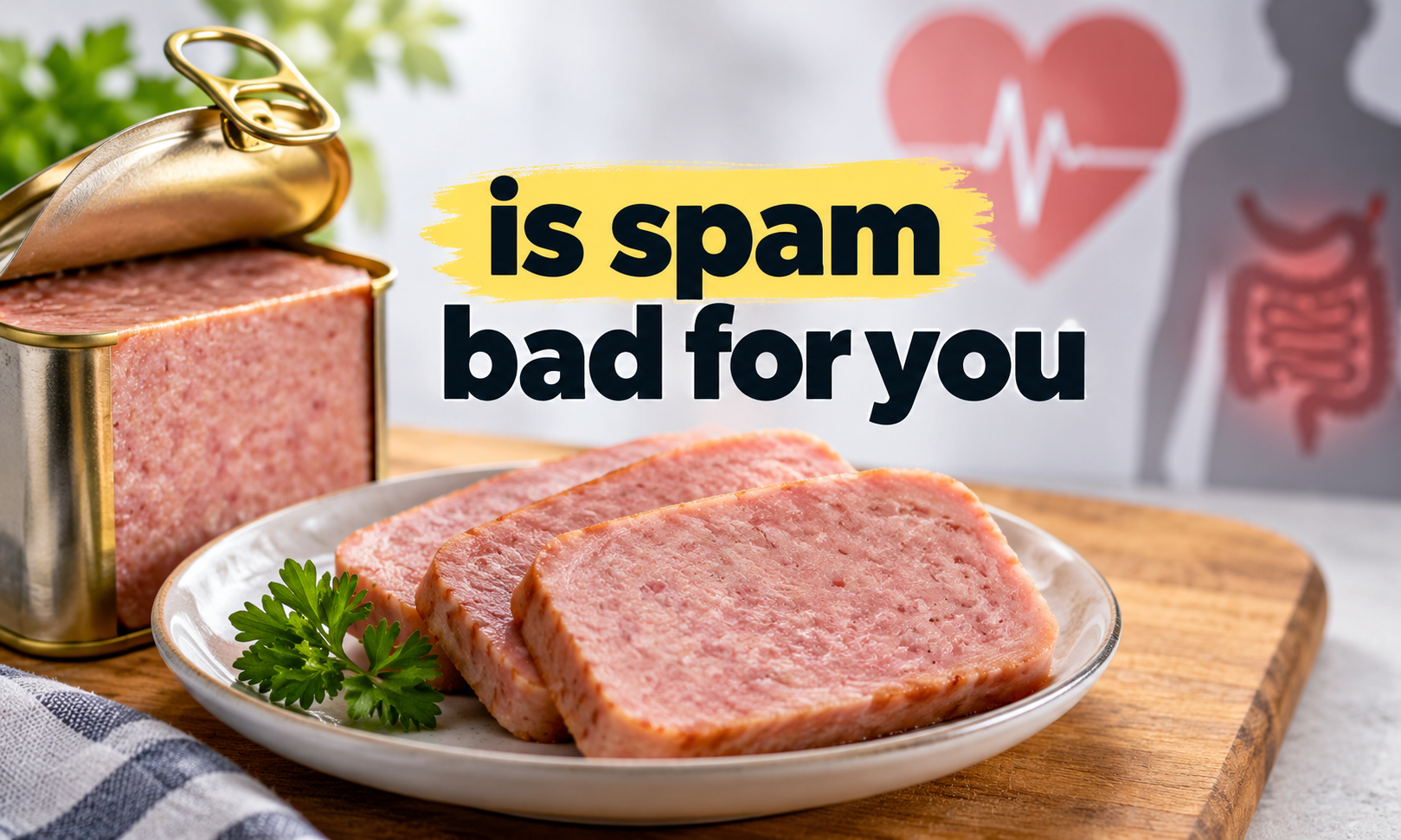
A concise U.S.-focused guide to SPAM nutrition, sodium, saturated fat, sodium nitrite, processed-meat evidence, and portion control
If you are wondering is spam bad for you, the short answer is that SPAM can fit occasionally into an otherwise balanced diet, but it is not an especially nutritious everyday protein choice. It is processed meat, high in sodium and saturated fat, and preserved with sodium nitrite. Those features matter more when portions are large or processed meat is eaten frequently.
A current SPAM Classic label lists about 180 calories, 16 grams of fat, 6 grams of saturated fat, 7 grams of protein, and roughly 770 to 790 milligrams of sodium per 2-ounce serving. That means a small serving provides useful protein, but it also supplies about one-third of the FDA Daily Value for sodium and 30 percent of the Daily Value for saturated fat.
What Is SPAM Made From?
SPAM Classic has a short ingredient list: pork with ham, salt, water, modified potato starch, sugar, and sodium nitrite. The product is cooked and canned, which gives it a long shelf life and makes it convenient for sandwiches, breakfast dishes, rice bowls, and recipes that need a salty meat component.
Its simplicity does not make it minimally processed. Curing, salting, and adding nitrite place it firmly in the processed-meat category.
What Does a Serving of SPAM Provide?
| Nutrient | Per 2 oz SPAM Classic | Why It Matters |
| Calories | 180 | Moderate for a small portion |
| Protein | 7 g | Contributes protein, but less than many lean-meat servings |
| Total fat | 16 g | High relative to the serving size |
| Saturated fat | 6 g | About 30% of the FDA Daily Value |
| Sodium | 770-790 mg | About one-third of the 2,300 mg Daily Value |
| Carbohydrate | 1 g | Very low carbohydrate |
| Fiber | 0 g | Does not contribute dietary fiber |
Why Is the Sodium in SPAM a Concern?
Sodium is the clearest nutritional drawback. The FDA Daily Value is less than 2,300 milligrams per day, and the agency considers 20 percent of the Daily Value or more per serving to be high. A 2-ounce serving of SPAM is already well above that threshold.
The FDA guidance on sodium explains that most sodium in the U.S. diet comes from packaged, prepared, and restaurant foods rather than from the salt shaker.
Regularly eating high-sodium foods can make it harder to stay within recommended limits, particularly for people with high blood pressure, kidney disease, heart failure, or other conditions where sodium restriction may be advised.
Is the Saturated Fat in SPAM a Problem?
SPAM is also relatively high in saturated fat. Six grams in a small serving is substantial, especially if the rest of the meal includes eggs, cheese, butter, fried food, or other sources of saturated fat.
A diet consistently high in saturated fat can raise LDL cholesterol in many people. Choosing more unsaturated fats and leaner proteins more often can make it easier to keep saturated fat intake lower.
What About Sodium Nitrite?
Sodium nitrite is used in cured meats to help preserve the product, control harmful bacteria, and maintain color and flavor. The concern is not that one serving is acutely toxic. The larger issue is the long-term evidence surrounding processed meat as a dietary pattern.
Nitrites can participate in the formation of N-nitroso compounds under certain conditions. Research on processed meat also involves other factors, including heme iron, cooking methods, sodium, and the overall dietary pattern.
Does Eating Processed Meat Increase Cancer Risk?
Yes, frequent processed-meat intake is associated with increased colorectal cancer risk. The World Health Organization’s International Agency for Research on Cancer classifies processed meat as carcinogenic to humans because the evidence that it causes colorectal cancer is considered sufficient.
The current WHO explanation of processed meat and cancer risk notes that an analysis of 10 studies estimated about an 18 percent increase in colorectal cancer risk for each 50-gram portion of processed meat eaten daily.
That classification does not mean SPAM is as dangerous as smoking. IARC categories describe how strong the evidence is that something can cause cancer, not how large the risk is.
Is SPAM Worse Than Other Processed Meats?
Not necessarily. SPAM belongs to the same broad category as bacon, sausage, hot dogs, ham, corned beef, jerky, and other processed meats.
The nutritional differences depend on the product. Some sausages may have even more saturated fat, while some deli meats may contain less fat but similar amounts of sodium. The best comparison is the Nutrition Facts label, especially serving size, sodium, saturated fat, and protein.
Does SPAM Have Any Nutritional Benefits?
Yes, but they are modest. SPAM provides protein, calories, and some micronutrients from pork. It is shelf-stable, convenient, and can be useful when refrigeration is limited.
The tradeoff is that it provides relatively little protein for the amount of sodium and saturated fat. Lean poultry, fish, eggs, beans, lentils, tofu, or lower-sodium canned proteins can provide protein with a more favorable nutrient profile.
Can SPAM Fit Into a Healthy Diet?
Yes, particularly when it is eaten occasionally and in a modest portion. One serving in a meal that also contains vegetables, beans, fruit, or whole grains is very different from eating several servings of processed meat every day.
The American Heart Association guidance on processed foods recommends using Nutrition Facts labels to choose products lower in sodium and saturated fat.
If you enjoy SPAM, think of it more as a salty flavor ingredient than as the main protein on the plate. Smaller amounts can still provide the familiar taste while reducing sodium and saturated-fat exposure.
How Can You Make a SPAM Meal Healthier?
Use a smaller portion and build the rest of the meal around high-fiber foods. Pairing a few slices with vegetables, brown rice, beans, eggs with vegetables, or a large salad is nutritionally stronger than making processed meat the majority of the meal.
Avoid stacking multiple salty ingredients such as SPAM, cheese, soy sauce, and packaged seasoning in the same dish. A lower-sodium SPAM variety can reduce sodium somewhat, but it is still a processed meat and should be treated similarly in terms of overall frequency.
Frequently Asked Questions About SPAM
Is SPAM unhealthy if I eat it once in a while?
For most healthy adults, an occasional moderate serving is unlikely to be a major concern. The bigger issue is frequent processed-meat intake and the overall amount of sodium and saturated fat in your diet.
Is SPAM high in sodium?
Yes. A 2-ounce serving of SPAM Classic contains roughly 770 to 790 milligrams of sodium, about one-third of the FDA Daily Value.
Is SPAM a good source of protein?
It contains protein, but 7 grams per 180-calorie serving is modest compared with many lean meats, fish, low-fat dairy foods, beans, or tofu.
Is low-sodium SPAM healthy?
It can reduce sodium compared with the classic version, but it is still processed meat and may still contain significant sodium and saturated fat.
Can I eat SPAM if I have high blood pressure?
Because SPAM is high in sodium, people with high blood pressure should be especially mindful of portions and total daily sodium. Individual guidance may differ based on medications and overall health.
Is canned meat automatically bad for you?
No. Canning itself is not the main concern. Nutritional quality depends on ingredients, sodium, fat, protein, and how often the food is eaten.
Final Thoughts
SPAM is not a food that must be completely avoided, but it is best treated as an occasional processed meat rather than an everyday protein staple. Its main drawbacks are high sodium, substantial saturated fat, and its place in the processed-meat category, which is associated with higher colorectal cancer risk when eaten regularly.
If you like the taste, smaller portions, less frequent use, plenty of vegetables and fiber-rich foods, and choosing lower-sodium options can make it easier to fit into an otherwise balanced diet.
This article is written for a U.S. audience using nutrition and public-health information available in October 2026. Nutrition labels can change, so check the package you buy for the most current serving size and nutrient values.