

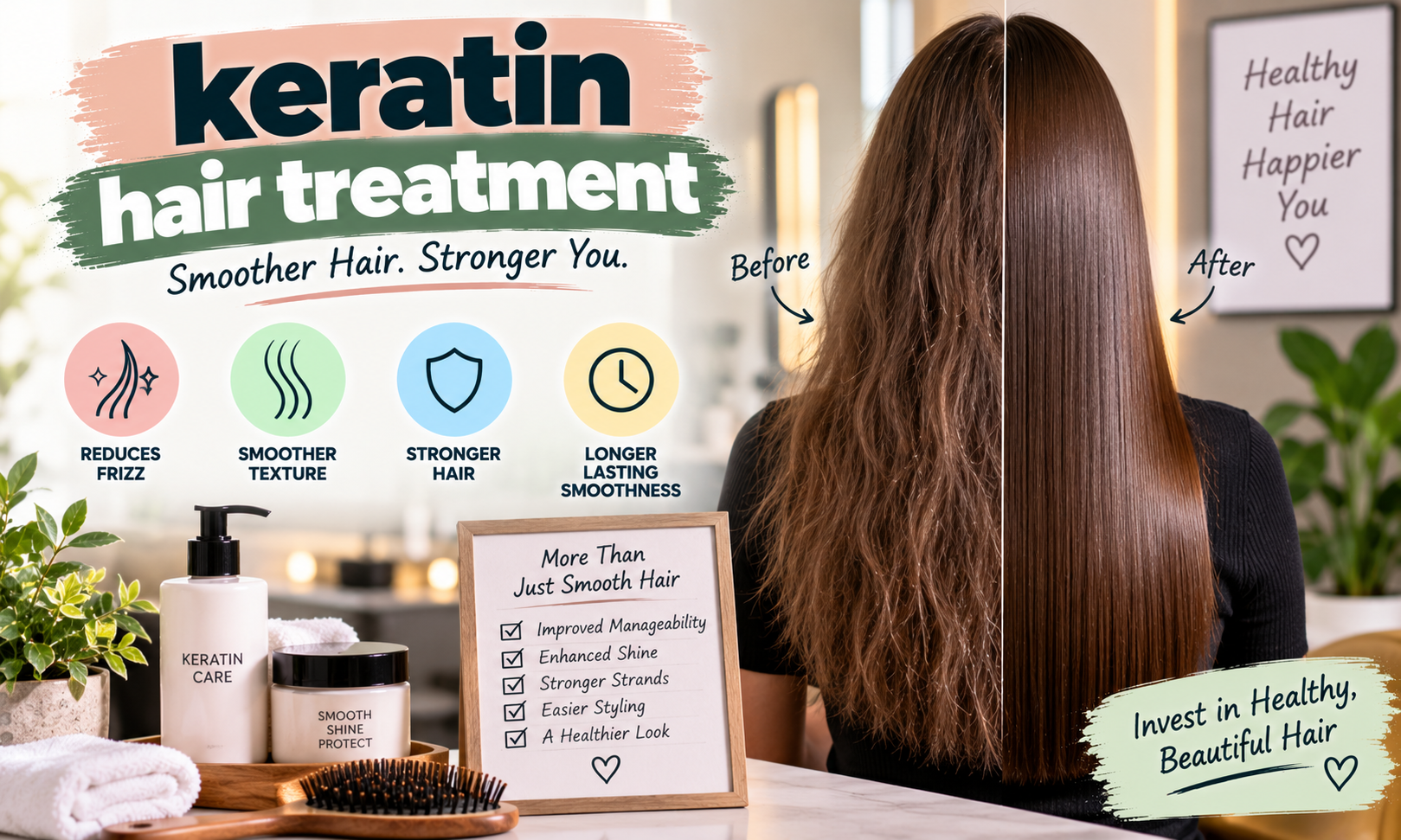
A practical guide to smoother hair, heat sealing, formaldehyde exposure, hair damage, longevity, and safer salon choices
A keratin hair treatment is a salon smoothing process designed to reduce frizz, make hair look shinier, and shorten styling time. The treatment usually involves applying a smoothing solution to the hair, blow-drying it, and then sealing the result with a high-temperature flat iron.
The name can make the process sound like a simple protein treatment, but the results come from more than keratin alone. Many smoothing formulas contain formaldehyde, methylene glycol, or chemicals that can release formaldehyde when heated. That means the biggest health concern is often chemical exposure during the treatment, while repeated high heat can also stress the hair shaft.
What Does a Keratin Treatment Actually Do?
Keratin is a structural protein naturally found in hair, nails, and the outer layer of skin. Salon keratin treatments do not permanently rebuild damaged hair from the inside. Instead, they coat and smooth the hair surface while chemical and heat processing changes how the strands behave.
The result is usually straighter, less frizzy hair with more shine and easier manageability. People with coarse, curly, wavy, or frizz-prone hair often notice the largest cosmetic change.
Depending on the product, technique, hair type, and aftercare, the smoother effect may last several weeks to several months.
What Are the Main Benefits?
| Potential Benefit | What You May Notice | Important Tradeoff |
| Less frizz | Smoother surface and fewer flyaways | Effect fades over time |
| More shine | Hair may reflect light more evenly | Shine does not mean the hair is healthier internally |
| Faster styling | Less time needed for blow-drying or flat-ironing | Treatment itself uses substantial heat |
| Straighter texture | Curls or waves may loosen | Original texture may take months to return |
| Easier detangling | Hair can feel softer and more manageable | Overprocessing can make fragile hair more breakable |
Why Is Formaldehyde a Concern?
Formaldehyde is a strong-smelling gas that can irritate the eyes, nose, throat, lungs, and skin. It is also classified as a known human carcinogen.
The FDA’s current guidance on hair-smoothing products warns that many smoothing products contain formaldehyde, formalin, or methylene glycol and can release formaldehyde gas when the product is heated with a blow-dryer or flat iron.
Short-term exposure can cause watery or burning eyes, coughing, wheezing, nausea, skin irritation, and burning in the nose or throat. People with asthma or respiratory sensitivity may react more strongly.
Can a Product Labeled Formaldehyde-Free Still Be a Problem?
Yes. OSHA has documented that some hair-smoothing products labeled formaldehyde-free or no-formaldehyde still contained formaldehyde or ingredients that released it during heating.
OSHA’s hair-salon formaldehyde guidance notes that methylene glycol and other chemicals can release formaldehyde during blow-drying or flat-ironing, and labels do not always make the risk obvious.
If exposure is a concern, ask the salon for the ingredient list and Safety Data Sheet rather than relying only on marketing words such as keratin, organic, natural, or formaldehyde-free.
Can Keratin Treatments Damage Hair?
They can, especially when the hair is already bleached, brittle, chemically relaxed, or heavily heat-damaged.
The flat iron used to seal many treatments is often set to a very high temperature. Repeated heat can weaken the hair cuticle, reduce moisture, and increase breakage.
The smoother appearance can sometimes hide damage temporarily because the surface is coated and flattened. If hair feels unusually dry, snaps easily, or becomes thinner after treatment, the process may have been too aggressive for the hair’s condition.
Who Should Be Extra Cautious?
People with very fragile, bleached, or overprocessed hair may want to avoid strong smoothing treatments or ask for a lower-heat alternative.
People with asthma, chemical sensitivities, scalp irritation, or a history of reacting to salon fumes should discuss the risk before treatment.
Pregnant people are often advised to avoid formaldehyde-releasing smoothing treatments because inhalation exposure is unnecessary and safer alternatives are available. Healthline also advises against keratin treatments during pregnancy.
How Can You Make a Salon Treatment Safer?
Choose a well-ventilated salon and ask exactly which product will be used. A professional stylist should be willing to show you the ingredient label or Safety Data Sheet.
Look for names such as formaldehyde, formalin, methylene glycol, methanediol, or formaldehyde monohydrate. OSHA also warns that some chemicals can release formaldehyde when heated even if the product does not list formaldehyde directly.
Tell the stylist if you have asthma, allergies, a sensitive scalp, or recently bleached hair. Ask whether the heat setting can be adjusted for your hair type.
How Long Does a Keratin Treatment Last?
Many salon treatments last about 2 to 6 months, although results vary widely. Frequent washing, clarifying shampoos, swimming, hair texture, and the strength of the original treatment all affect how quickly the smoothing fades.
The effect gradually wears away as the coating and chemical changes diminish and new untreated hair grows from the scalp.
How Should You Care for Hair Afterward?
Follow the exact instructions provided for the product used. Some treatments require keeping the hair dry for a period after the appointment, while newer systems may allow washing sooner.
Use gentle shampoo and conditioner, limit unnecessary high-heat styling, and apply heat protectant when blow-drying or flat-ironing.
Swimming in chlorinated or salt water can shorten the treatment’s life. Rinsing hair after swimming and using conditioner can reduce dryness.
Are Sulfate-Free Shampoos Necessary?
They are not medically necessary, but many stylists recommend gentler shampoos because frequent strong cleansing can make the smoothing effect fade sooner.
The more important point is to avoid products that leave the scalp irritated or the hair unusually dry. Choose a shampoo based on your scalp and hair type rather than assuming sulfate-free automatically means healthier.
What Are Alternatives to Keratin Smoothing?
If your goal is mainly frizz control, you may not need a chemical smoothing treatment. Conditioning masks, leave-in conditioners, silicone-based serums, heat protectants, blow-drying with lower heat, and regular trims can improve manageability.
For people who want temporary straightening, a blowout or flat iron provides a shorter-term result without the same chemical exposure, although repeated heat still needs to be managed carefully.
If the priority is repairing breakage rather than straightening, a stylist can recommend conditioning or bond-supporting treatments that do not rely on formaldehyde-releasing smoothing chemistry.
What Is the Difference Between Keratin and Chemical Relaxing?
Traditional relaxers permanently alter the hair’s internal chemical bonds to straighten tightly curled hair. Keratin smoothing usually produces a semi-permanent smoothing effect and can loosen curl without using the same relaxing chemistry.
Both processes can damage hair if performed too aggressively, and both require careful product selection and technique.
Frequently Asked Questions
Is a keratin treatment good for your hair?
It can make hair look smoother, shinier, and easier to manage, but the cosmetic improvement does not necessarily mean the hair is healthier. High heat and chemicals can damage fragile hair.
Does every keratin treatment contain formaldehyde?
No, but many smoothing products contain formaldehyde, methylene glycol, or other ingredients that may release formaldehyde when heated. Always check the specific product.
How long does a keratin treatment last?
Results commonly last around 2 to 6 months, depending on hair type, washing frequency, product strength, and aftercare.
Can keratin treatments cause hair loss?
They are more commonly associated with breakage than true hair loss from the follicle. Severe heat or chemical damage can make hair appear thinner because strands snap.
Can you do keratin treatment on colored hair?
Sometimes, but chemically processed hair may be more fragile. A strand test and lower heat may be appropriate, especially after bleaching.
Is keratin treatment safe during pregnancy?
Because some treatments release formaldehyde and pregnancy does not require this exposure, many experts advise postponing formaldehyde-releasing treatments until after pregnancy.
Final Thoughts
Keratin treatments can make frizzy or coarse hair smoother, shinier, and easier to style, but the benefits come with tradeoffs. The biggest health concern is formaldehyde exposure from certain smoothing products, while high heat can increase breakage in fragile hair.
Before booking, ask for the exact product name, ingredient list, and Safety Data Sheet, choose a well-ventilated salon, and be cautious with products that make vague formaldehyde-free claims. For damaged, highly bleached, or sensitive hair, a gentler conditioning or frizz-control approach may be the better option.
This article is written for a U.S. audience using FDA, OSHA, and consumer-health guidance available in October 2026. Product formulas vary, and salon workers may face greater cumulative exposure than clients because they perform these treatments repeatedly.