

A practical guide to traditional foot maps, pressure points, possible benefits, safety, and scientific limitations
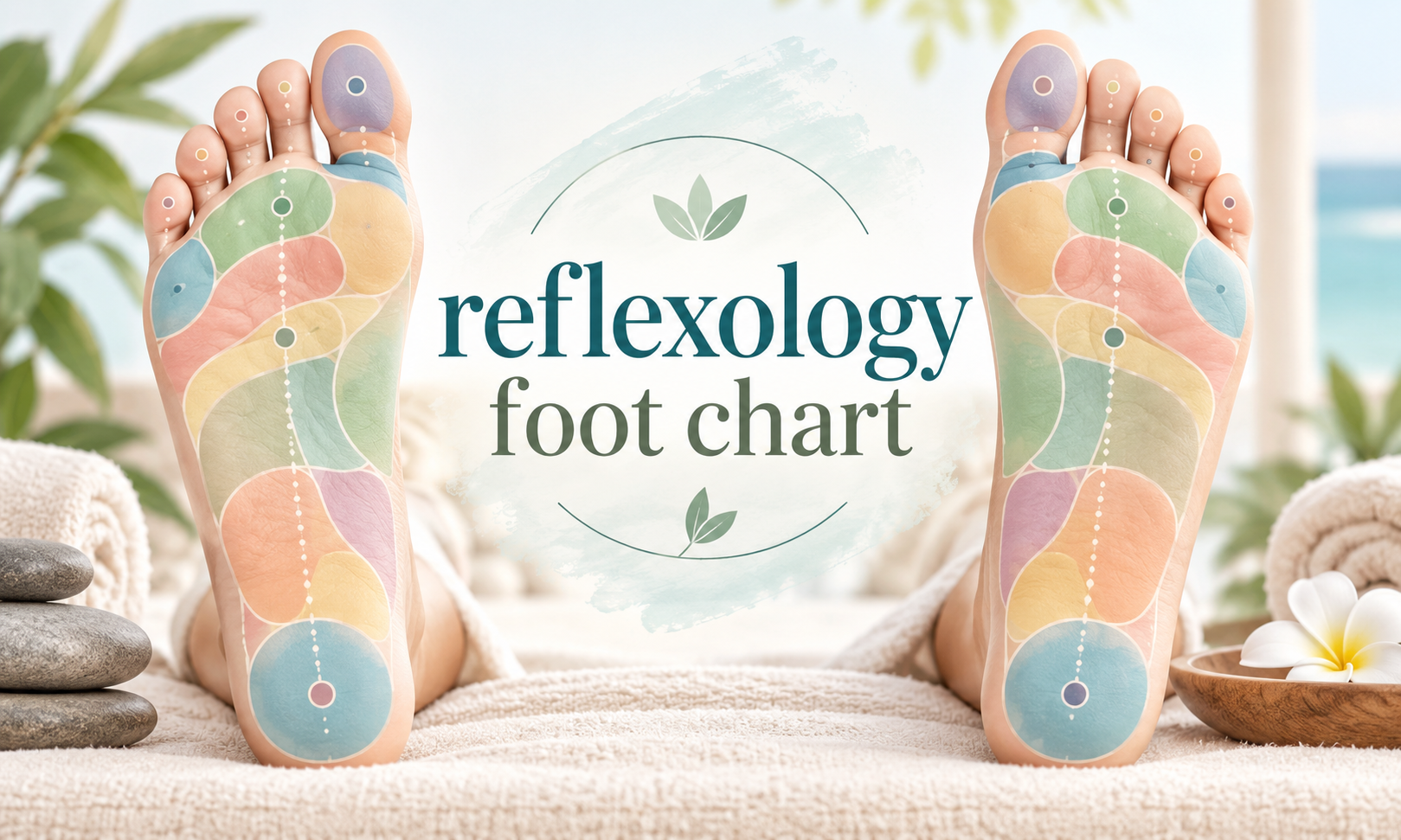
A reflexology foot chart is a traditional map that divides the feet into zones believed to correspond with different parts of the body. In common reflexology systems, the toes are associated with the head and sinuses, the ball of the foot with the chest, the arch with abdominal organs, and the heel with the pelvis and lower body.
These connections are part of reflexology theory rather than established anatomy. Applying pressure to the feet can feel relaxing and may help some people with stress, pain, or sleep, but scientific research has not proven that pressing a specific foot point can directly treat the organ shown on a chart.
What Is Foot Reflexology?
Reflexology is a complementary practice in which pressure is applied to specific points on the feet, hands, or ears. Practitioners use maps that assign these points to body regions and believe that working a reflex point can influence the corresponding area.
The National Center for Complementary and Integrative Health describes reflexology as pressure applied to points believed to match other parts of the body, while noting that the claim that this pressure causes healing in those distant areas has not been proven.
How Is a Reflexology Foot Chart Organized?
Most charts follow a head-to-toe arrangement. The uppermost parts of the feet, especially the toes, represent the upper body, while lower regions of the foot are mapped to the abdomen, pelvis, hips, and lower body.
The inside edge of each foot is commonly mapped to the spine. The outer edge is often associated with the shoulders, arms, hips, knees, and legs. Some charts also distinguish between the left and right foot for organs located mainly on one side of the body.
Traditional Reflexology Foot Chart
| Foot Area | Traditional Reflexology Association | Common Technique |
| Tips and pads of toes | Head, brain, sinuses | Gentle thumb pressure or small circles |
| Base of toes | Neck and throat | Light pressure across the toe joints |
| Ball of foot | Chest, lungs, upper back | Slow thumb walking across the padded area |
| Inner edge | Spine and back | Pressure from heel toward big toe |
| Upper arch | Stomach, liver, pancreas and upper abdomen | Moderate circular pressure |
| Middle/lower arch | Intestines, kidneys and abdominal area | Slow thumb walking |
| Outer edge | Shoulders, arms, hips, knees and legs | Gentle linear pressure |
| Heel | Pelvis, lower back and reproductive region | Broad pressure with thumb or knuckle |
These are traditional reflexology associations. They are not anatomical connections and should not be used to diagnose disease.
What Do the Toes Represent?
Traditional charts usually place the head and sinus areas in the toes. The big toe is often mapped to the brain, pituitary region, and head, while the smaller toes are associated with sinus or facial areas.
Reflexologists may massage or hold the toes when a client wants relaxation around headaches, sinus pressure, eyestrain, or mental tension. Any benefit may come from relaxation, touch, and general nervous-system effects rather than from a proven direct connection between a toe and the brain or sinuses.
What Does the Ball of the Foot Represent?
The padded area below the toes is usually linked with the chest. Common charts place the lungs across much of this region, while the heart is more often shown on the left foot.
Pressure here is often used in reflexology sessions aimed at relaxation or breathing comfort. It should not be used as a substitute for medical care for chest pain, shortness of breath, asthma, heart disease, or lung disease.
What Does the Arch Represent?
The arch is commonly mapped to the abdominal area. Different charts place the stomach, liver, pancreas, kidneys, and intestines across parts of the arch.
The right foot is often associated more strongly with the liver and gallbladder, while the left foot is commonly mapped to the stomach and spleen. These side-specific associations come from traditional reflexology systems and are not confirmed by anatomy or clinical testing.
What Does the Heel Represent?
Traditional reflexology charts usually associate the heel with the pelvis, lower back, hips, and reproductive organs. Practitioners may use broader pressure here because the heel has thicker skin and padding.
Heel tenderness itself is more commonly explained by local conditions such as plantar fasciitis, overuse, footwear problems, or injury than by a distant organ problem.
Does Reflexology Actually Work?
Research is mixed. Some studies report improvements in stress, anxiety, sleep, pain, or quality of life, but many trials are small, use different techniques, and are difficult to compare.
NCCIH states that reflexology has not been proven to heal the body parts supposedly represented by specific foot points. It also notes that some studies have found limited symptom benefits in particular groups, but evidence is insufficient for many conditions.
Healthline’s 2026 review of foot reflexology similarly concludes that reflexology may be useful as a complementary practice for relaxation or symptom relief, but the evidence is not strong enough to support broad medical claims.
What Benefits Might Be Realistic?
Relaxation is the most realistic expectation. A quiet session involving focused touch can reduce perceived stress and help some people feel calmer.
Some studies have reported reductions in pain or improvements in sleep in selected patient groups. These findings do not prove that the foot map itself is biologically accurate, and reflexology should be viewed as supportive care rather than a treatment for the underlying disease.
How Can You Try Reflexology at Home?
Sit comfortably and support one foot in your lap. Warm the foot with gentle rubbing, then use the thumb to apply steady, comfortable pressure to one area at a time.
A simple technique called thumb walking uses small forward movements of the thumb across the sole. Pressure should feel firm but not sharp or painful. One to three minutes on an area is enough for a basic self-massage.
If your goal is relaxation, there is no need to find a perfect point. A slow massage across the entire foot may be just as useful as following a detailed chart.
When Should You Avoid Reflexology?
Avoid pressure over open wounds, blisters, severe eczema, active athlete’s foot, recent fractures, sprains, or areas of acute inflammation.
Healthline advises extra caution for people with circulatory problems, gout, a history of blood clots, certain foot injuries, contagious skin conditions, or diabetes-related neuropathy and nonhealing wounds.
If you are pregnant, have significant vascular disease, take blood thinners, or have reduced sensation in the feet, check with a healthcare professional before having strong foot pressure.
Can a Reflexology Chart Diagnose Health Problems?
No. Tenderness at a particular reflex point does not prove that the corresponding organ is unhealthy.
Foot pain, swelling, numbness, skin changes, or focal tenderness should be evaluated based on the foot itself and the person’s medical history. A reflexology chart should never be used to diagnose heart, liver, kidney, digestive, reproductive, or neurological disease.
Frequently Asked Questions
What do the toes mean on a reflexology chart?
Traditional charts associate the toes with the head, brain, face, and sinuses. These are reflexology beliefs rather than proven anatomical connections.
Which foot is linked with the liver?
Traditional maps usually place the liver mainly on the right foot because the liver is located mostly on the right side of the body.
Which part of the foot represents the spine?
Reflexology charts commonly map the spine along the inner edge of each foot from the heel toward the big toe.
Can reflexology cure disease?
No. Reflexology has not been proven to cure diseases or heal organs through foot pressure. It may be used as a complementary relaxation practice.
Why does a reflexology point hurt?
Local pressure can be tender for many reasons, including muscle tension, calluses, foot injury, plantar fasciitis, or sensitivity. Tenderness does not diagnose a distant organ problem.
How often can you do foot reflexology?
Gentle self-massage can be done regularly if it is comfortable. Strong pressure should be avoided on injured, inflamed, numb, or poorly healing feet.
Final Thoughts
A reflexology foot chart can be a useful guide for traditional foot massage, but it should be viewed as a historical and complementary wellness map rather than an anatomical diagram.
The strongest evidence for reflexology is around relaxation and possible symptom relief in selected situations, not the idea that pressing one foot point directly treats a specific organ. Use it for comfort if you enjoy it, and rely on appropriate medical care for diagnosis or treatment of health problems.
This article is written for a U.S. audience using reflexology and complementary-health guidance available in October 2026. Reflexology is not a substitute for diagnosis or treatment by a qualified healthcare professional.