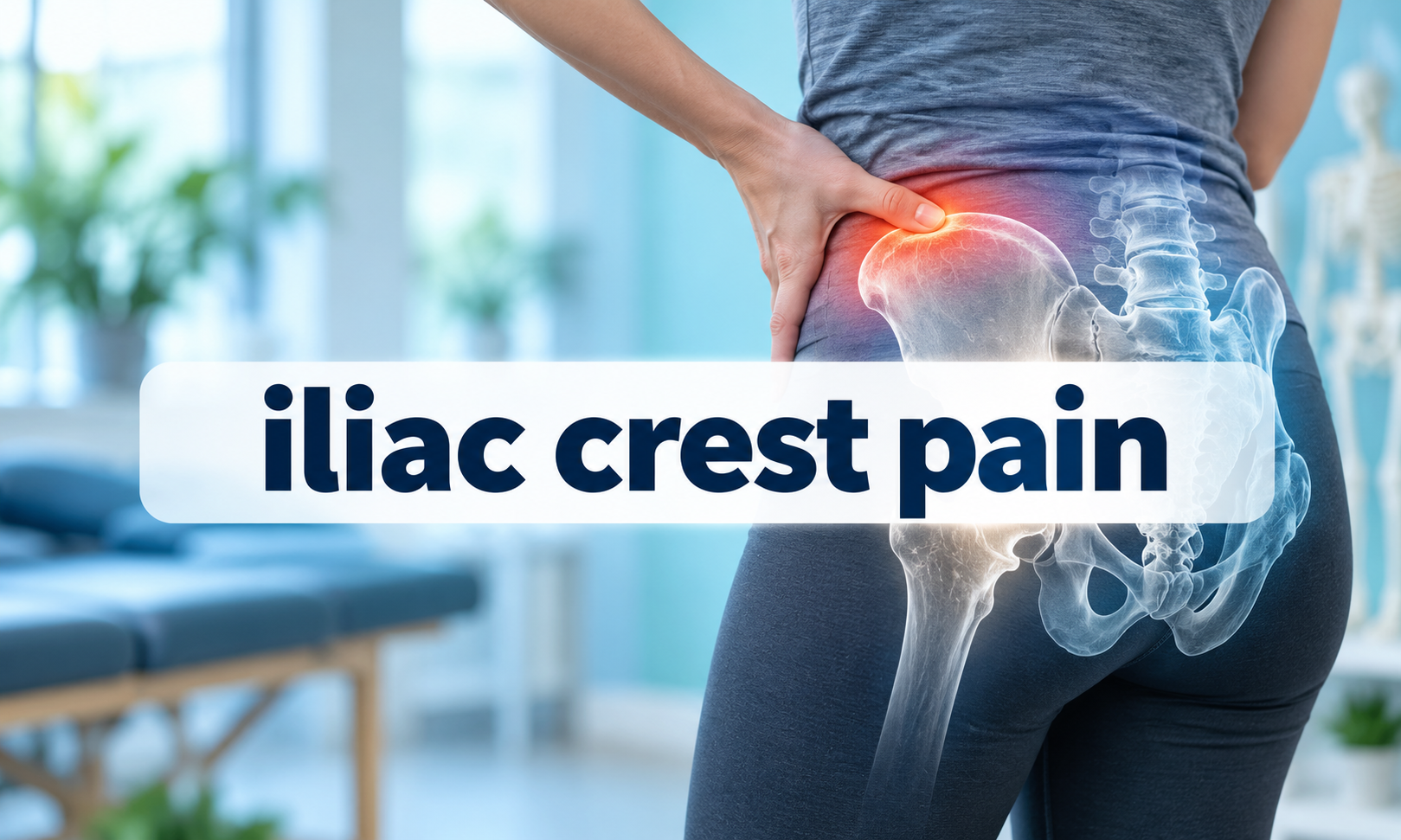
Iliac crest pain is pain along the curved upper border of the pelvis, the bony ridge you can feel when you put your hands on your waist. It can come directly from a bruise or injury to the bone, from muscles and ligaments attached to the crest, or from nearby structures such as the lower back or sacroiliac joint. The exact location and trigger matter because pain at the top of the pelvis is not always the same as pain inside the hip joint.
The WebMD guide to iliac crest pain describes direct causes such as trauma, weak supporting muscles, ligament injury, and pregnancy-related pelvic pain, along with referred pain from sacroiliac joint dysfunction. Treatment depends on which structure is actually irritated.
What Can Cause Iliac Crest Pain?
| Possible cause | Typical clues | Common trigger or pattern |
| Hip pointer / direct trauma | Sharp tenderness, swelling, bruising over the crest | Fall, collision, sports impact |
| Muscle or tendon strain | Pain with twisting, bending, running, or resisted movement | Overuse or sudden force |
| Iliolumbar ligament irritation | Localized tenderness near the back of the iliac crest | Low-back strain or repetitive loading |
| Sacroiliac joint pain | Low-back/buttock pain that may spread toward hip or groin | Standing, stairs, turning, prolonged positions |
| Pregnancy-related pelvic girdle pain | Pain around pelvis, buttocks, or lower back | Pregnancy or postpartum period |
| Referred low-back pain | Crest pain with back stiffness or movement-related symptoms | Lumbar muscle, joint, or disc problems |
What Exactly Is the Iliac Crest?
The ilium is the largest pelvic bone, and its upper border is the iliac crest. Several abdominal, back, hip, and pelvic muscles attach around this area, so pain can develop even when the bone itself is not injured.
The sacroiliac joints sit farther back where the ilium meets the sacrum. Pain from these joints can feel close to the crest.
Can a Direct Blow Cause Iliac Crest Pain?
Yes. A hard impact to the top of the pelvis can cause a contusion commonly called a hip pointer. Johns Hopkins Medicine describes a hip pointer as a bruise or tear involving tissue attached to the top of the ilium, often caused by a blow, fall, or sudden twisting movement.
Pain is usually localized and may come with swelling or bruising. Walking, bending, or tightening nearby abdominal muscles can hurt.
When Could a Fracture Be the Cause?
A pelvic fracture is less common but important after a major fall, collision, or in people with fragile bones.
Severe pain after an injury, inability to walk or bear weight, or marked tenderness requires urgent assessment rather than home exercise.
Can Muscles and Ligaments Around the Crest Become Strained?
Yes. Abdominal, gluteal, hip-flexor, and lower-back muscles help stabilize the pelvis. Twisting, sprinting, kicking, lifting, or repetitive training can irritate their attachments.
Muscle-related pain often changes with movement and may improve with rest, although protective tightness can make the hip and lower back feel stiff.
What Is Iliolumbar Syndrome?
The iliolumbar ligament helps connect the lower lumbar spine to the pelvis. Older clinical research describes an iliac crest pain syndrome or iliolumbar syndrome characterized by localized tenderness along the medial or posterior iliac crest in some people with low-back pain.
This diagnosis is mainly clinical. Because several structures in the same region can hurt, persistent pain should not be labeled from location alone.
Can the Sacroiliac Joint Cause Pain Near the Iliac Crest?
Yes. The sacroiliac, or SI, joint is where the spine connects to the pelvis. Cleveland Clinic’s sacroiliitis guide notes that irritation of this joint can cause pain in the lower back, buttocks, or legs.
SI-related pain may worsen with prolonged standing, stairs, turning in bed, or shifting weight between legs.
Why Can Pregnancy Cause Pain Around the Iliac Crest?
Pregnancy changes posture, pelvic loading, and ligament tension. Pelvic girdle pain may be felt in the lower back, buttocks, pubic area, or near the iliac crest.
Significant pregnancy-related pelvic pain should be discussed with an obstetric clinician or physiotherapist rather than treated with aggressive stretching.
How Is Iliac Crest Pain Diagnosed?
A clinician usually identifies the exact tender area and asks about injury, exercise, pregnancy, and back symptoms. Examination may include walking, hip and spine movement, strength testing, and SI joint maneuvers.
Imaging is not needed for every mild strain, but may be used when fracture, arthritis, or significant soft-tissue injury is suspected.
What Can Help Mild Iliac Crest Pain at Home?
For mild pain after overuse or a minor injury, basic measures may help. The NHS hip-pain guidance recommends avoiding excessive strain while continuing gentle movement when possible, using wrapped ice for up to about 20 minutes at a time, and considering appropriate pain relief.
- Temporarily reduce running, jumping, heavy lifting, or movements that clearly reproduce pain.
- Use a wrapped cold pack after a recent impact or flare if it feels helpful.
- Keep walking and changing position within a comfortable range instead of prolonged bed rest.
- Ask a clinician or pharmacist whether an over-the-counter pain reliever is safe for you.
Which Exercises May Help Once Acute Pain Settles?
Gentle Hip Flexor Stretch
Kneel on the affected side with the other foot in front. Keep the trunk upright and gently shift forward until you feel a mild stretch. Stop if it increases crest pain.
Clamshell or Hip-Abductor Strengthening
Lie on your side with the knees bent and feet together. Keep the pelvis steady while lifting the top knee, then lower slowly. Start with a small number of controlled repetitions.
Core and Pelvic Stability
Gentle abdominal bracing and bridges may help when poor trunk and hip control contribute to recurrent pain. A physical therapist can tailor the program if symptoms persist.
Exercises should create mild muscular effort, not sharp pain. Do not stretch or strengthen aggressively in the first hours after a major impact or when a fracture has not been ruled out.
When Should You See a Doctor?
Arrange medical evaluation if pain is worsening, recurrent, affects sleep or normal activities, or does not improve with sensible self-care.
A primary-care clinician, physiotherapist, sports medicine specialist, or orthopedist may be appropriate depending on the pattern.
Which Symptoms Need Urgent Care?
- Severe pain after a fall, collision, or other significant injury
- Inability to walk or put weight on the affected leg
- A hot, swollen hip area with fever or feeling very unwell
- New numbness, weakness, or loss of feeling after an injury
- Rapidly increasing swelling, bruising, or pain
Frequently Asked Questions About Iliac Crest Pain
Why Does My Iliac Crest Hurt When I Walk?
Walking loads the pelvis repeatedly, so pain can come from a muscle or ligament strain, SI joint irritation, a recent bruise, or another mechanical problem. Persistent pain should be examined if it does not improve.
Can Running Cause Iliac Crest Pain?
Yes. Repetitive loading, sudden increases in training, weak pelvic stabilizers, or irritated muscle and ligament attachments can all contribute. Reduce the aggravating load and return gradually once pain has settled.
Can Iliac Crest Pain Come From the Lower Back?
Yes. Pain from the lumbar spine or iliolumbar region can be felt near the top of the pelvis. Back movement reproducing the pain is one clue, but examination is needed to identify the source.
Is Iliac Crest Pain the Same as Hip-Joint Pain?
No. Iliac crest pain is usually felt along the top rim of the pelvis. Hip-joint pain is often deeper and may be felt in the groin, front of the thigh, or side of the hip. The two regions can overlap, so location is only one clue.
What Is the Bottom Line?
Iliac crest pain can come from a direct bruise or fracture, strained muscles or ligaments, iliolumbar pain, SI joint irritation, pregnancy-related pelvic changes, or referred low-back pain. The top of the pelvis has many tissue attachments, so the same location can have several different causes.
Mild mechanical pain often improves with temporary activity modification, ice after a recent flare, gentle movement, and gradual strengthening. Severe pain after trauma, inability to bear weight, fever with a hot swollen area, or new neurologic symptoms requires prompt medical assessment.
Leave a Reply